

Two Major War Fronts in the World: Friction Between Countries or Economic Recovery and Adjustment?

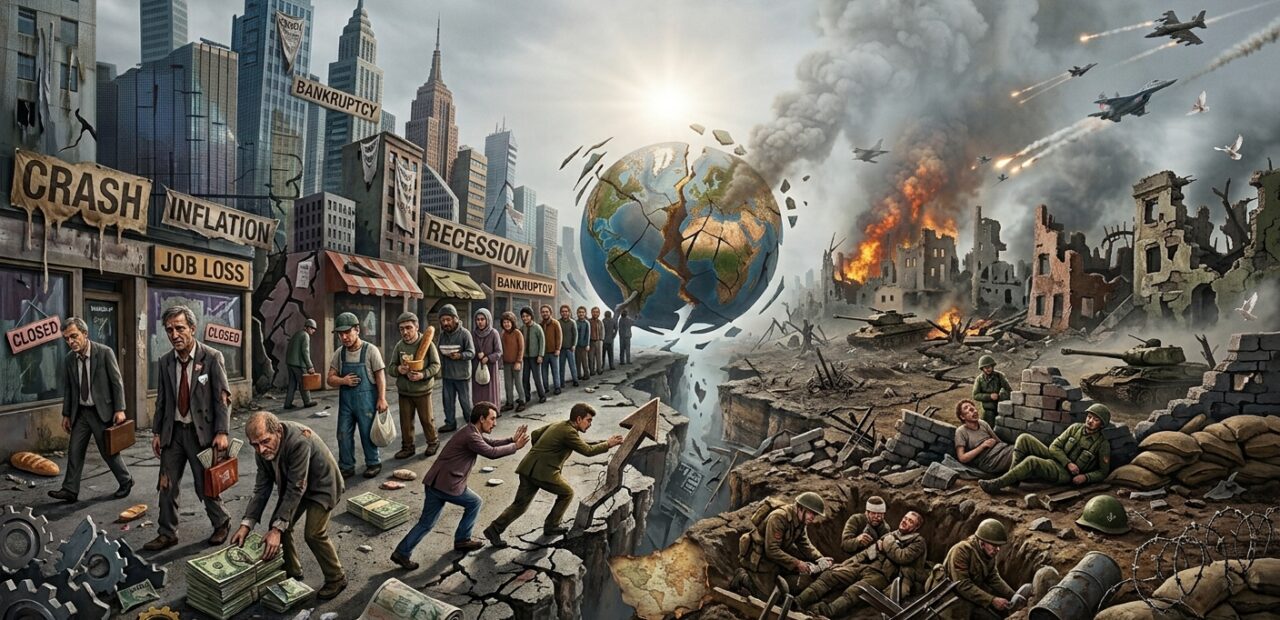
Today’s major war fronts are not only military confrontations; they are stress tests for the world economy. The wars in Ukraine and the Middle East reveal how quickly political friction can become an economic shock. They reshape alliances, disrupt energy and food markets, increase defense spending, pressure public budgets, and force countries to choose between efficiency and security. The central question behind this blog title is therefore clear: are these conflicts simply clashes between countries, or are they also part of a wider global recovery and adjustment after years of pandemic disruption, inflation, debt pressure, and geopolitical rivalry?
1. Ukraine: A War That Redefined European Security
The Russia-Ukraine war is one of the clearest examples of how a territorial war can become a global economic and strategic turning point. On the surface, it is a war over sovereignty, borders, and national survival. At a deeper level, it has become a renewed form of U.S.–Russia rivalry, similar to a Cold War fought through alliances, sanctions, intelligence, technology, energy policy, and military support rather than direct confrontation between Washington and Moscow. For Russia, Ukraine represents a strategic buffer and a test of whether Moscow can still influence the post-Soviet space. For the United States and many European allies, supporting Ukraine is a way to defend the post-Cold War order and show that democratic alliances can still resist territorial aggression. NATO has therefore gained renewed relevance: it has strengthened its eastern flank, expanded defense coordination, and pushed members to increase military spending. Economically, the war has forced Europe to reduce dependence on Russian energy, accelerate alternative supply arrangements, and rethink industrial resilience. It has also affected grain, fertilizer, fuel, defense production, and public spending across many countries. In this sense, Ukraine is both a geopolitical friction point and an economic adjustment process, where the cost of security is being added to the price of recovery.
2. The Middle East: Conflict, Energy, and Global Trade Pressure
The Middle East shows another version of the same pattern: a regional conflict can quickly become a global economic concern. What began as an Israel-Palestine war around Gaza has increasingly drawn in wider regional and global tensions, especially the rivalry between Israel and Iran and the long-running tension between the United States and Iran. Israel sees Iran’s regional influence and support for armed groups as a direct security threat, while Iran presents its position as part of a broader resistance strategy against Israeli and Western power. The United States, because of its long-standing support for Israel and its interest in containing Iranian influence, has become deeply connected to the crisis. This makes the conflict more than a local war; it becomes a contest over deterrence, influence, regional leadership, military positioning, and control of strategic routes. Different actors may try to use the conflict to advance their own goals: weakening enemies, strengthening alliances, gaining domestic political advantage, protecting trade routes, or controlling the regional balance of power. But while powerful actors compete, civilians carry the heaviest cost through displacement, insecurity, shortages, and loss of life. The economic consequences spread far beyond the battlefield. Tensions in the Middle East affect oil prices, shipping insurance, Red Sea and Gulf trade routes, investor confidence, inflation expectations, and humanitarian funding. When oil, shipping, and food costs rise together, the burden falls hardest on import-dependent and lower-income countries.
Taken together, Ukraine and the Middle East show two different versions of the same global pattern: wars begin as security crises, but they quickly become tests of economic endurance, alliance discipline, industrial capacity, and national adaptability.
Are These Wars Political Frictions or Economic Adjustments?
The answer to the blog title is that these wars are both political frictions and economic adjustments. Wars often begin from disputes over territory, security, identity, ideology, leadership, or regional influence. But once they expand, they become economic events. They change energy prices, redirect supply chains, increase military expenditure, weaken currencies, raise borrowing costs, and force households, firms, and governments to adjust. The wider global economy is already recovering unevenly from inflation, high debt, and pandemic-era disruption. Conflict adds another layer of pressure by making food, fuel, trade, and finance more uncertain. Recent global economic outlooks warn that war-related shocks can slow growth, keep inflation higher for longer, and hit emerging and developing economies especially hard because many of them depend on imported energy, food, machinery, and capital.
In that sense, today’s wars are part of a wider restructuring of the world economy. Globalization is no longer guided only by cheap production and open supply chains. Countries are now prioritizing secure energy, reliable food supply, defense readiness, trusted technology partners, and regional trade blocs. This shift is expensive. Defense spending can stimulate some industries in the short term, but it can also crowd out social services, infrastructure, education, and health if public budgets are already under pressure. At the same time, countries that control energy, food, shipping routes, minerals, technology, or military production gain new influence. War therefore accelerates a global adjustment from a purely efficiency-driven economy to a security-driven economy.
What This Means for Developing Economies
Developing economies are especially exposed to this shift. Many import fuel, wheat, fertilizer, machinery, technology, and medicine, so global conflict quickly appears in local prices. When shipping routes are threatened or oil prices rise, inflation increases, currencies weaken, government subsidies become more expensive, and debt servicing becomes harder. For African economies, including Nigeria, the lesson is practical: food security, energy diversification, stronger local production, regional trade, and balanced diplomacy are no longer optional. They are survival strategies in a world where war in one region can raise transport costs, import bills, and living expenses in another.
Conclusion
The two major war fronts show that modern conflict cannot be separated from the world economy. Ukraine reflects the return of great-power rivalry, NATO’s renewed importance, and Europe’s forced adjustment to a new security reality. The Middle East reflects how a local war can expand into a wider contest involving Israel, Iran, the United States, energy markets, shipping routes, and regional power. Both conflicts prove the same point: wars are not only fought with weapons; they are also fought through sanctions, alliances, oil prices, trade routes, currencies, technology, and public budgets. The friction between countries is real, but so is the economic recovery and adjustment happening beneath it. The world is not only fighting over territory and influence; it is renegotiating how power, trade, security, and prosperity will work in the years ahead.
Credits and Source Links
- International Monetary Fund — World Economic Outlook, April 2026
- International Monetary Fund — World Economic Outlook Update, July 2026
- World Bank — Global Economic Prospects
- World Bank — Commodity Markets Outlook press release on energy prices
- UNCTAD — Navigating Troubled Waters: Impact to Global Trade of Shipping Disruptions