

BRICS SUMMIT 2026 in India – Is BRICS the New Alternative for World Leadership?

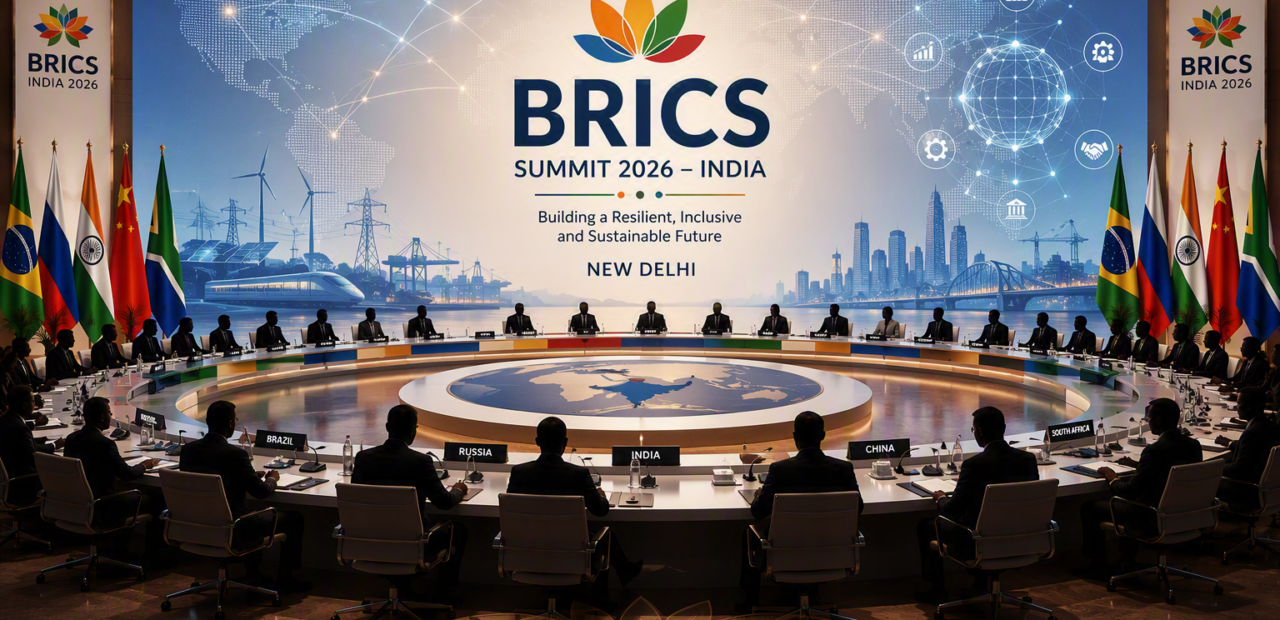
The BRICS Summit 2026 in New Delhi has become one of the most important geopolitical events of the year. Hosted by India on September 12–13 at Bharat Mandapam, the summit brings together leaders from an expanded group of emerging economies at a time when the world is facing wars, trade tensions, energy insecurity, currency debates and growing dissatisfaction with old global institutions. For many countries in Asia, Africa, the Middle East and Latin America, BRICS is no longer just a discussion forum; it is becoming a platform through which the Global South is demanding a stronger voice in world affairs.
Why BRICS Matters So Much This Year
BRICS is receiving unusual attention in 2026 because the group now represents a much larger share of global population, energy production, trade routes and economic growth than before. The expanded grouping includes major economies and energy powers such as China, India, Russia, Brazil, South Africa, Egypt, Ethiopia, Indonesia, Iran, Saudi Arabia and the United Arab Emirates. This gives BRICS influence over oil, gas, food security, infrastructure finance, digital technology, shipping lanes and development policy.
The second reason is timing. The summit is taking place during a period of global uncertainty: conflict in Ukraine, instability in West Asia, pressure on maritime trade, supply-chain disruption and growing debate over whether international institutions such as the United Nations, the World Bank and the International Monetary Fund still reflect today’s balance of power. BRICS members argue that emerging and developing economies deserve greater representation in global decision-making.
Is BRICS an Alternative to Western Leadership?
BRICS is not yet a single replacement for Western-led institutions, but it is clearly becoming an alternative centre of influence. The group does not operate like NATO, the European Union or the G7. Its members have different political systems, economic priorities and security interests. India and China still have border disputes, Saudi Arabia and Iran have complicated regional interests, and Russia’s war in Ukraine remains a major global divide. Because of these differences, BRICS cannot easily act as one united bloc on every issue.
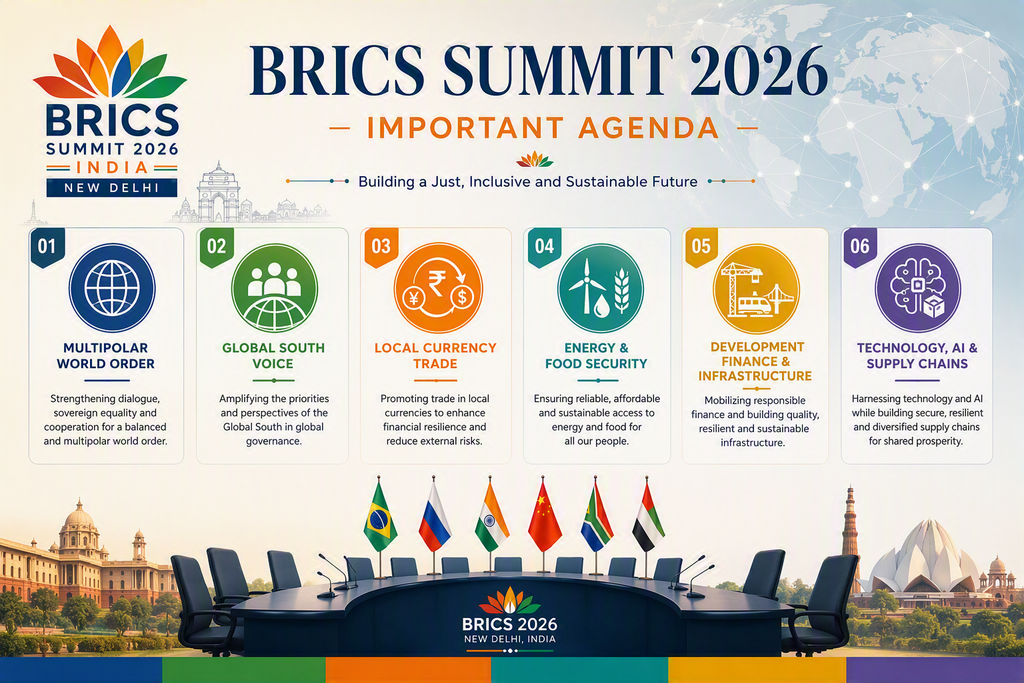
However, BRICS is important because it offers countries another diplomatic and economic platform. Its message is simple: the world should be multipolar, not dominated by one country or one group of rich nations. BRICS wants reforms in global governance, more local-currency trade, stronger development financing, better technology access and greater respect for the priorities of developing countries.
Important World Leaders Attended the Summit and Their Main Agenda
| Name / Representative | Country / Institution | Position | Important agenda at the summit |
| Narendra Modi | India | Prime Minister and host | Chairing the summit, Global South leadership, inclusive global governance, resilient supply chains, innovation, sustainability and India’s role as a bridge between major powers. |
| Xi Jinping | China | President | Trade cooperation, technology, global governance reform, China-India relations, border stability and strengthening BRICS as a major non-Western platform. |
| Vladimir Putin | Russia | President | Energy cooperation, multipolar world order, response to sanctions, strategic partnerships and discussion of Ukraine-related geopolitical tensions. |
| Cyril Ramaphosa | South Africa | President | African development, climate finance, fairer global financial institutions, trade links and stronger representation for Africa in world decision-making. |
| Mauro Vieira | Brazil | Foreign Affairs Minister, representing Brazil | Climate priorities, food security, South-South diplomacy, trade cooperation and Brazil’s continued role as a founding BRICS member. |
| Masoud Pezeshkian | Iran | President | West Asia security, sanctions, energy markets, regional stability and Iran’s place in the expanded BRICS grouping. |
| Abdel Fattah el-Sisi | Egypt | President | Middle East stability, Suez Canal trade routes, food security, infrastructure investment and development finance. |
| Abiy Ahmed Ali | Ethiopia | Prime Minister | African growth, food security, infrastructure finance, climate resilience and stronger Global South cooperation. |
| Prabowo Subianto | Indonesia | President | Maritime cooperation, supply-chain security, energy transition, digital economy and Indonesia’s role as a new BRICS member. |
| Sheikh Khaled bin Mohamed bin Zayed Al Nahyan | United Arab Emirates | Crown Prince of Abu Dhabi | Energy security, investment, logistics, regional de-escalation and Gulf participation in BRICS economic cooperation. |
| Prince Faisal bin Farhan Al Saud / Saudi delegation | Saudi Arabia | Foreign ministerial / diplomatic representation | Energy-market stability, Gulf security, investment cooperation and Saudi Arabia’s position in the expanded BRICS framework. |
| Anwar Ibrahim | Malaysia | Prime Minister | Trade, digital economy, ASEAN-Global South cooperation, investment and stronger links between Southeast Asia and BRICS. |
| Anutin Charnvirakul / Thai delegation | Thailand | Prime Minister / senior representative | Regional trade, tourism, food security, connectivity and Southeast Asian engagement with BRICS. |
| Kassym-Jomart Tokayev | Kazakhstan | President | Energy, minerals, transport corridors, Eurasian connectivity and cooperation with BRICS economies. |
| Alexander Lukashenko | Belarus | President | Trade diversification, sanctions pressure, food and industrial cooperation, and deeper partnership with BRICS states. |
| Miguel Díaz-Canel / Cuban delegation | Cuba | President / senior representative | Health cooperation, sanctions, development finance and stronger Global South solidarity. |
| Kashim Shettima | Nigeria | Vice President, representing Nigeria | African development, energy investment, food security, trade, infrastructure and Nigeria’s role in Global South diplomacy. |
| Jamshid Kuchkarov / Uzbek delegation | Uzbekistan | Deputy Prime Minister / senior representative | Connectivity, trade corridors, investment, agriculture and Central Asian economic cooperation. |
| Jessica Alupo | Uganda | Vice President | African representation, development finance, agriculture, health and South-South cooperation. |
| Le Minh Hung | Vietnam | Prime Minister | Manufacturing, supply chains, digital economy, maritime trade and Southeast Asian cooperation with BRICS. |
| Ferdinand R. Marcos Jr. | Philippines | President | Maritime issues, trade, investment, food security and wider Asian cooperation with BRICS partners. |
| Evariste Ndayishimiye | Burundi | President | African development, agriculture, infrastructure support and stronger voice for smaller developing economies. |
| Mario Lubetkin | Uruguay | Foreign Affairs Minister | Latin American engagement, trade, agriculture, sustainability and broader cooperation with emerging markets. |
| António Guterres | United Nations | UN Secretary-General | Multilateral reform, peace diplomacy, sustainable development, climate action and cooperation between BRICS and the UN system. |
| Dr. Tedros Adhanom Ghebreyesus | World Health Organization | Director-General | Global health cooperation, pandemic preparedness, health equity, medicine access and health-system resilience. |
| Dr. Ngozi Okonjo-Iweala | World Trade Organization | Director-General | Trade reform, supply-chain resilience, fairer trade rules, development-focused commerce and reducing barriers in global trade. |
| Dilma Rousseff | New Development Bank | President | Development finance, infrastructure funding, local-currency lending and financing projects for emerging economies. |
Key Expectations and Predictions After the Summit
After the New Delhi summit, BRICS is likely to focus on five major directions. First, it will push harder for reform of the United Nations Security Council and global financial institutions so that large developing economies have more power. Second, BRICS will continue encouraging trade in local currencies, although a single BRICS currency remains unlikely in the near future. Third, the group will try to build practical cooperation in food security, energy, health, digital payments, artificial intelligence and resilient supply chains. Fourth, BRICS may expand its partner-country system, allowing more countries to join its activities without immediately becoming full members. Fifth, the summit may strengthen India’s role as a bridge between the West, Russia, China and the Global South.
The biggest prediction is that BRICS will not replace the existing world order overnight, but it will increase pressure on that order. If BRICS can turn declarations into real projects—such as development finance, payment systems, trade corridors and technology cooperation—it will become more influential. If it remains only a political speech platform, its impact will be limited.
The Importance of Putin and Xi Jinping Visiting India
The visit of Russian President Vladimir Putin is highly significant because Russia remains one of India’s key strategic partners, especially in defence, energy and regional diplomacy. His presence in New Delhi signals that India is maintaining an independent foreign policy: it continues to engage Russia while also working with the United States, Europe and other partners. For Moscow, the visit shows that Russia is not diplomatically isolated in the non-Western world.
The visit of Chinese President Xi Jinping is equally important, perhaps even more sensitive. It is his first visit to India in several years and comes after a long period of difficult India-China relations. The Modi-Xi meeting focused on border peace, trade imbalance, supply-chain concerns, market access and people-to-people exchanges. If India and China can reduce tensions, it will make BRICS stronger. If rivalry continues, BRICS will remain powerful in size but divided in strategy.
India’s Strategic Role
India’s hosting of the summit gives New Delhi a major diplomatic opportunity. India can present itself as a leader of the Global South while avoiding becoming trapped in an anti-Western camp. This balance is important. India wants a fairer world order, but it also wants strong relations with the United States, Europe, Japan, Russia, the Middle East and Africa. Therefore, India’s best role is not to make BRICS a bloc against the West, but to make BRICS a platform for reform, dialogue and practical cooperation.
Conclusion
BRICS Summit 2026 in India is important because it reflects a world in transition. The old Western-led system still has enormous power, but many countries now want more choices, more representation and more control over their economic future. BRICS is not yet the new world government, nor is it a complete replacement for the G7 or the United Nations. But it is becoming a serious alternative voice in global leadership. The success of BRICS will depend on whether it can move from big statements to real implementation. If India can help BRICS focus on cooperation rather than confrontation, the New Delhi summit may be remembered as a turning point in the rise of a more multipolar world.
