Artificial Intelligence and Cyber Warfare: The New Weapons of Major Powers and a Challenge for Vulnerable Nations

How AI, autonomous systems, and cyber operations are reshaping global security, military power, and technological sovereignty.
War Is Moving from Battlefields to Algorithms
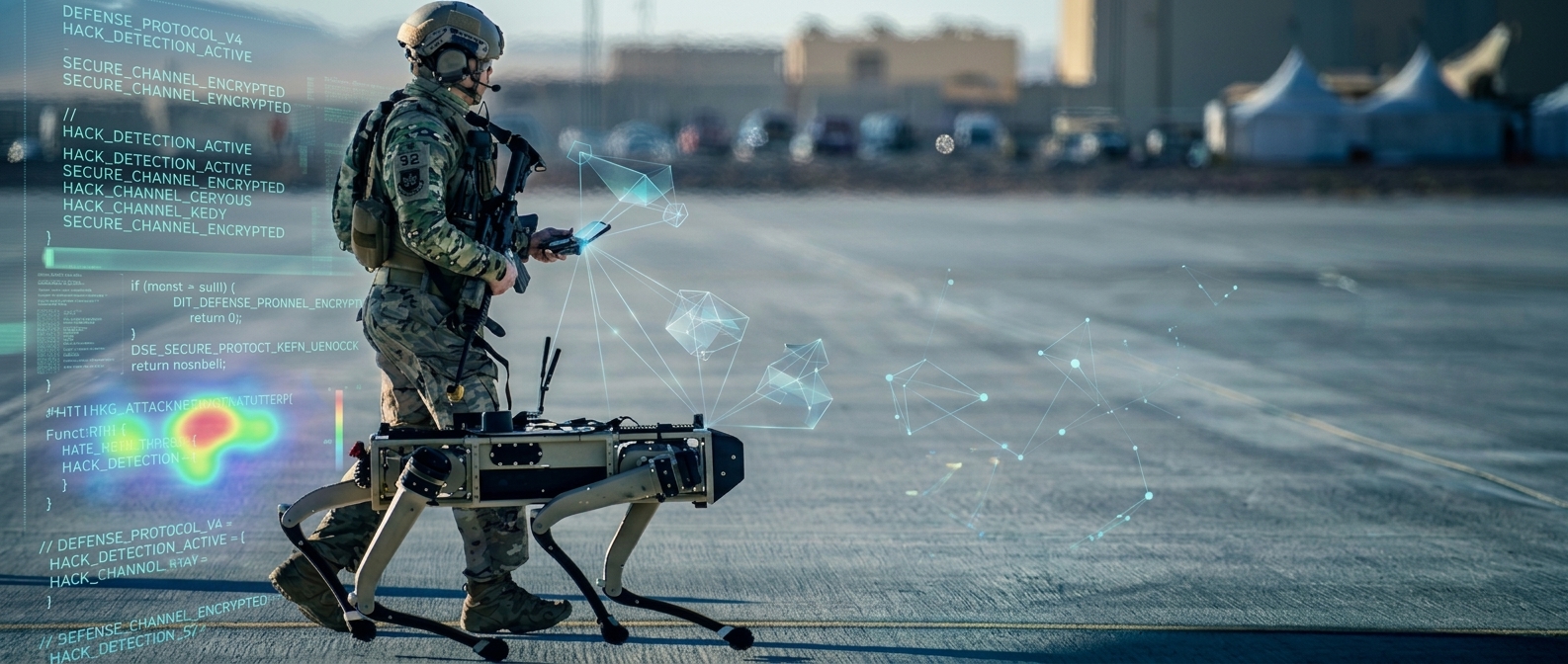
Artificial intelligence and cyber warfare are no longer distant ideas reserved for science fiction. They are becoming central instruments of national power. In the past, military strength was measured mainly by tanks, aircraft, missiles, naval fleets, and nuclear weapons. Today, a country’s power is increasingly measured by its ability to control data, protect digital infrastructure, automate military decisions, and disrupt an enemy’s systems without firing a conventional shot.
This shift is especially important because modern societies depend on electricity grids, banking networks, telecom systems, satellites, cloud platforms, ports, hospitals, military command systems, and public information channels. A cyberattack on any of these systems can weaken a country from within. When artificial intelligence is added to cyber operations, attacks can become faster, more adaptive, and harder to detect. This creates a new kind of warfare in which code, algorithms, and data become weapons.
Power Multiplication for Major Powers
Major powers are integrating AI and cyber capabilities directly into their defence systems because these technologies multiply existing military strength. AI does not replace every weapon, soldier, or commander, but it increases the speed, reach, and precision of military operations. In this sense, AI functions as a “force multiplier”: it allows a technologically advanced state to do more with the resources it already has.
One of the clearest examples is the use of autonomous and semi-autonomous drones. In recent conflicts, drones have been used for surveillance, targeting, logistics, and direct attacks. Reports from the Russia-Ukraine war show how AI-assisted systems can help automate drone navigation, target recognition, and battlefield data processing. The war in Ukraine has demonstrated how AI can enhance traditional military equipment by automating drone take-off, landing, and targeting, while also supporting information warfare.
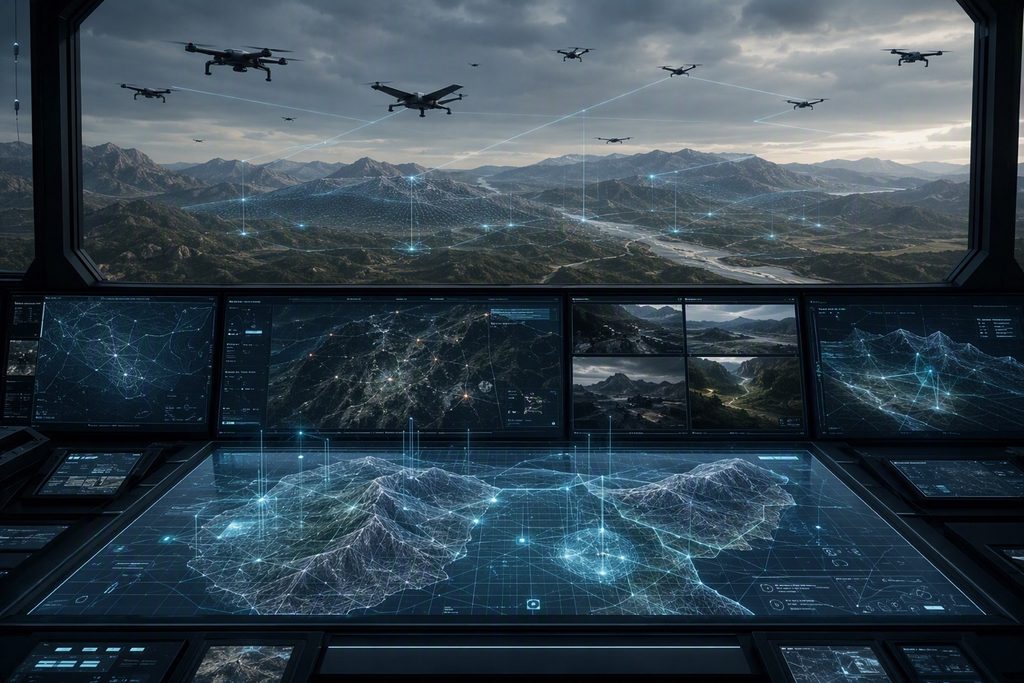
Autonomous drones and AI-assisted command systems can increase the speed and precision of military operations.
- Autonomous Weapon Systems: Drones and robotic systems execute missions with minimal human intervention.
- Speed of Decision-Making: AI processes battlefield data instantly to out-maneuver adversaries.
- Predictive Logistics: Machine learning models forecast equipment failures and optimize supply chains before deployment.
- Information Operations: Deepfakes and automated bots destabilize enemy civilian populations through targeted disinformation.
Why AI and Cyber Warfare Matter
1. The Security Dilemma: In international relations theory, the security dilemma explains how one country’s attempt to increase its security can make other countries feel less secure. When a major power develops AI-enabled weapons, autonomous drones, or advanced cyber units, rival states may interpret this as a threat and respond by building their own capabilities. The result is an AI arms race, even if each country claims it is acting defensively.
2. Deterrence Theory: Traditional deterrence is based on convincing an enemy that an attack will lead to unacceptable retaliation. In cyber warfare, deterrence is more complicated because attackers can hide their identity, use proxy groups, or deny responsibility. AI makes this even more difficult by enabling faster attacks and automated decision-making. A country may struggle to know who attacked it, how to respond, and whether retaliation could escalate into a wider conflict.
3. Asymmetric Warfare Theory: Asymmetric warfare occurs when weaker actors use unconventional methods to challenge stronger opponents. Cyber weapons are attractive because they can be cheaper than fighter jets or missile systems. However, the same logic also hurts less-developed states: they may be highly vulnerable to cyberattacks but lack the resources, expertise, and infrastructure to defend themselves or respond effectively.
4. Dependency Theory: Dependency theory argues that less-developed countries can become structurally dependent on powerful states and multinational corporations. In the digital era, this dependency appears in reliance on foreign cloud services, imported software, external cybersecurity vendors, foreign satellites, and overseas data centres. A country may have political independence but still depend on foreign-controlled digital systems for banking, health, defence, communication, and governance.
Setbacks to Technological Sovereignty
For developing or digitally dependent nations, AI-powered cyber warfare creates a serious challenge to technological sovereignty. Technological sovereignty means the ability of a country to control its critical technologies, protect its data, build local capacity, and make independent decisions without excessive reliance on foreign digital infrastructure.

Digitally dependent countries face rising risks when critical systems such as power, banking, health care, telecoms, and data centres are exposed to cyber disruption.
- Asymmetric Vulnerability: Smaller nations face crippling digital strikes on power grids and banks without equivalent retaliatory options.
- Supply Chain Dependence: Reliance on foreign microchips and software creates built-in backdoors for foreign intelligence.
- Surveillance Exploitation: Advanced surveillance tools sold by global powers monitor local citizens, compromising domestic authority.
- Digital Infrastructure Control: Foreign ownership of cloud servers and undersea cables allows major powers to sever a nation’s internet access.
How AI and Cyber Warfare Are Already Changing Conflict
Ukraine and Russia: The Russia-Ukraine war has become one of the clearest modern examples of technology-driven conflict. Drones, AI-assisted targeting, electronic warfare, satellite imagery, cyber operations, and information campaigns are being used alongside conventional weapons. Ukraine has used AI tools for battlefield planning, drone operations, and processing data from missile attacks, while Russia has also adapted command-and-control systems under wartime pressure. Ukrainian officials have described AI as part of a new battlefield paradigm in which systems that collect and understand more data can gain operational advantage.
NATO and Allied Cyber Defence: NATO treats cyber defence as part of deterrence and defence, recognising cyberspace as an operational domain. This shows that cyber power is now institutionalised within modern defence strategy, not treated as a secondary technical issue. NATO states that cyber threats are complex, destructive, coercive, and increasingly frequent, and that cyberspace is contested at all times.
Autonomous Weapons and Military AI: Autonomous systems are changing the relationship between human decision-making and machines. NATO’s autonomy framework links autonomous systems to deterrence, resilience, interoperability, and responsible use, while also warning that strategic competitors are investing in these technologies for asymmetric advantage. NATO’s autonomy plan notes that autonomous systems can strengthen deterrence and defence but must be governed by lawfulness, accountability, reliability, governability, and bias mitigation.
The Geopolitical Reality
Physical borders no longer guarantee national security. A state may have an army, a flag, and recognised territory, yet still be vulnerable if its electricity grid, banking system, defence communications, cloud infrastructure, and public information space can be disrupted from outside. In the age of AI and cyber warfare, sovereignty depends not only on land and military hardware, but also on code, data, microchips, networks, and skilled human talent.
What Vulnerable Countries Should Do
Countries that lack advanced cyber and AI capacity should not assume that technological dependence is harmless. They need national cyber strategies, investment in local digital talent, stronger protection for critical infrastructure, regional cooperation, and clear laws governing data, surveillance, and AI use. Universities, private companies, military institutions, and government agencies must work together to build cyber resilience before a crisis occurs.
For African countries and other developing regions, the priority should be digital independence without isolation. This means building local capacity while still cooperating internationally. It also means demanding transparency from foreign technology suppliers, securing national data, investing in cybersecurity education, and developing emergency response teams that can defend hospitals, ports, banks, election systems, and telecom networks.
Conclusion
Artificial intelligence and cyber warfare are becoming new instruments of power for major states and serious challenges for vulnerable nations. They offer speed, precision, automation, and global reach, but they also create new risks: accidental escalation, surveillance abuse, digital dependency, infrastructure disruption, and widening inequality between technologically advanced and less-prepared countries.
The future of warfare will not be fought only with bullets, bombs, and borders. It will also be fought through algorithms, networks, data centres, satellites, and public perception. Any country that fails to secure its digital foundations may find itself independent in law but dependent in practice. Therefore, AI and cyber security must be treated not as optional technology issues, but as central pillars of national survival in the twenty-first century.