



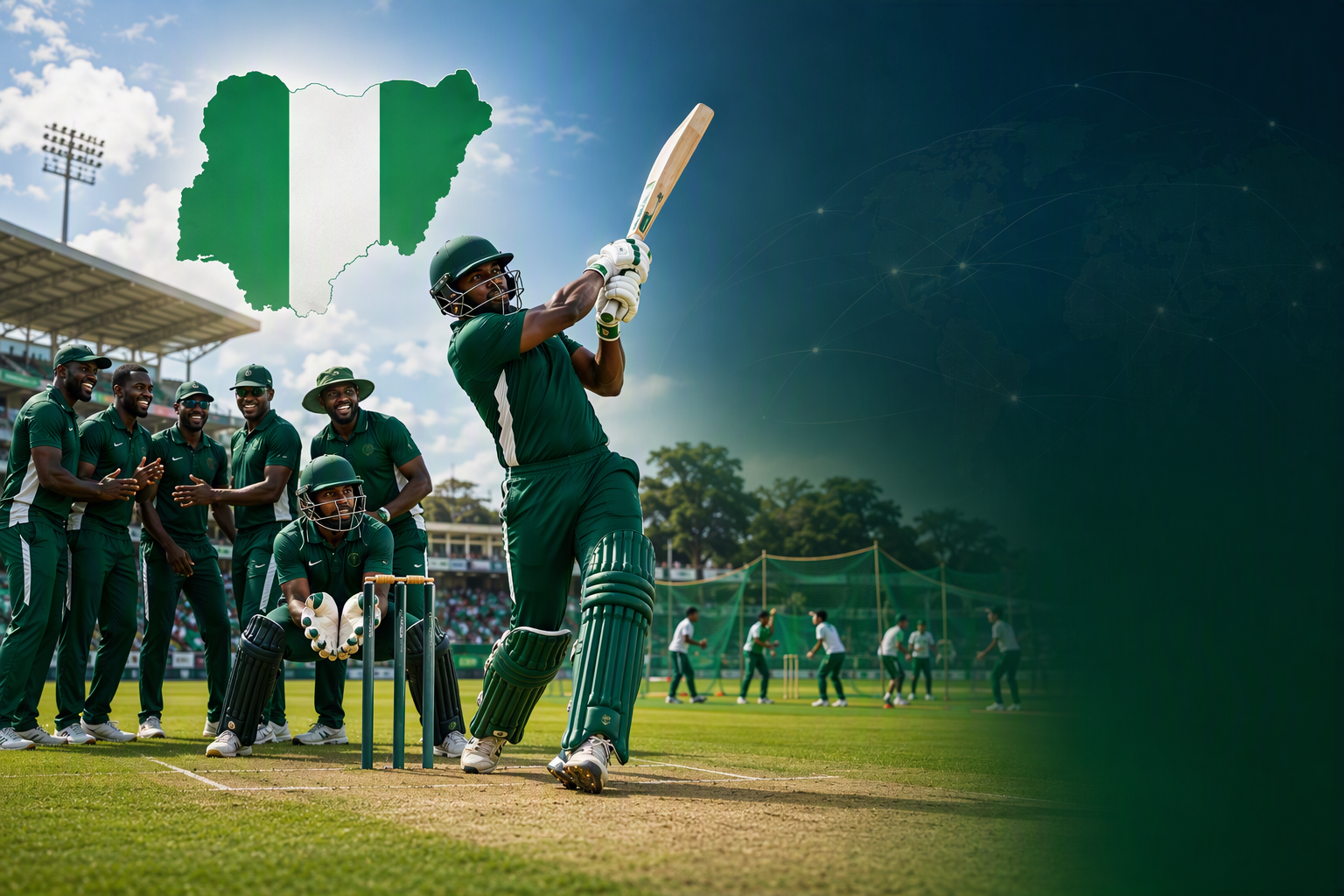
From Grassroots to Global Recognition: Assessing the Role of the Club Cricket Committee (CCC) and Recent Development Efforts in Advancing Cricket in Nigeria

Cricket in Nigeria is entering an important period of development. Although the sport has existed in the country for more than a century, it has often remained outside the mainstream of Nigerian sport. Stronger domestic competition, school programmes, improved facilities, women’s and youth achievements, commercial partnerships and the commitment of club owners are now creating a clearer pathway from grassroots participation to international cricket.
The Club Cricket Committee (CCC) Lagos is central to this progress because its league provides regular, meaningful matches across several divisions. For the 2025/26 season, the competition is led by Endurance Ofem, with experienced figures such as former chairman and Board of Trustees member Charles Omoera supporting its continuity. Clubs including Government College Ibadan Old Boys, Lagos Cricket Club, Thunderbolts, Island Titans, Ibeju Lekki, Rising Stars, Super Eagles, Warriors and Pathfinders widen access to the game and create competitive opportunities for players from different schools and communities.
Recent performances show the value of this structure. Nigeria captain Sylvester Okpe was recognised as the Premier League’s most valuable player and best batter, while Vikas Choubey earned the Division One MVP award. Eboka Teniola, Temitope Onikoyi, Leke Oyede, Rahmon Ali and Usman Adebiyi have also received recognition in recent competitions. Their achievements show that dependable club cricket can develop national-team leaders, experienced performers and emerging specialists.
Club owners are among the most important investors in this system. They help fund registration, equipment, transport, coaching, practice sessions and match-day expenses, often keeping teams active when sponsorship is limited. The most effective owners also recruit young players, arrange extra training, provide mentorship and support education and welfare. When a club maintains junior and women’s teams, employs qualified coaches and follows fair selection standards, it functions as a small development academy rather than simply a match-day side.
Commercial support can strengthen this work. Sterling Bank’s partnership with the CCC for the 2025/26 season supports participation, school outreach, live streaming and stronger promotion of players and teams. Sponsorship is most useful when it complements the year-round contribution of clubs and owners rather than replacing it. A stable combination of private investment, responsible club management and national coordination can give players more consistent opportunities.
Infrastructure will determine how competitive Nigeria can become. Improvements at the TBS Oval in Lagos, the MKO Abiola Stadium in Abeokuta and facilities in Edo, Nsukka, Uyo and Kaduna are important steps. Natural turf wickets, reliable practice nets and indoor facilities expose players to conditions closer to international cricket and allow more regular training. Regional high-performance centres with video analysis, strength and conditioning, sports-medicine support and qualified coaching would help talented players develop outside Lagos and Abuja.
Facilities must be maintained and connected to a dependable competition calendar. T20 cricket should be balanced with 40- or 50-over matches and, where practical, longer formats that build concentration and tactical discipline. School programmes should feed registered clubs and national age-group teams, while women and young players should receive equal access to coaching, equipment and grounds. Clear club-licensing, player-welfare and financial-accountability standards would also protect athletes and reduce dependence on a single owner or sponsor.
Nigeria can become more competitive when the CCC, the Nigeria Cricket Federation, club owners, schools and sponsors work as one system. Regular competition, responsible ownership, strong coaching and well-maintained facilities will allow talented players to progress on merit and prepare more effectively for international cricket. The long-term goal should be a national pathway in which a young person can discover the game at school, join a stable club, train in suitable conditions and advance through consistent performance.
Sources: Nigeria Cricket Federation; PUNCH reporting on CCC leadership, teams and player awards; PUNCH reporting on CCC sponsorship; and The Guardian Nigeria reporting on facility upgrades.

